









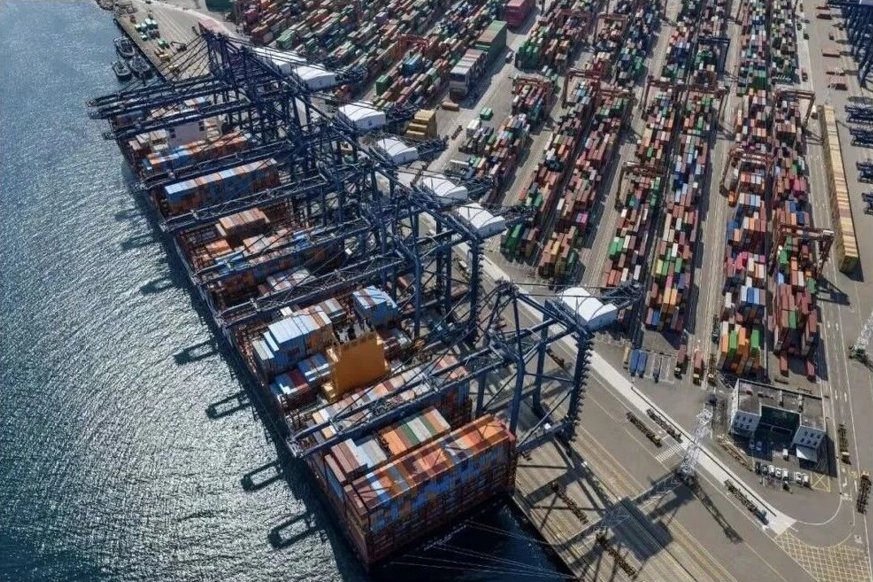
On September 16, John Lee, Chief Executive of the Hong Kong Special Administrative Region, unveiled the first Five-Year Plan for the Economic and Social Development of the Hong Kong Special Administrative Region (2026–2030), hereinafter referred to as the "Plan". It is the first comprehensive five-year plan since Hong Kong's return to the motherland. Yantian Port is the only port specifically highlighted in the Plan, which calls for the promotion of the successful experience of complementary development between Hong Kong's Kwai Tsing Container Terminals and Shenzhen's Yantian Port.
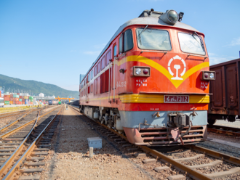
For the second consecutive year, John Lee highlighted the Chongqing-Shenzhen-Hong Kong Scheduled Rail-Sea Service and Chengdu-Shenzhen-Hong Kong Scheduled Rail-Sea Service in his Policy Address, recognising their contribution to mutually beneficial development among inland regions, Shenzhen and Hong Kong.
(The following content is reproduced from SZTV News)
The Plan, released on September 16, mentions Shenzhen more than 100 times, with Shenzhen-Hong Kong cooperation featuring prominently throughout the document.
Shenzhen places particular emphasis on cooperation with Hong Kong. From September 10 to 11, Jin Lei, Secretary of the CPC Shenzhen Municipal Committee, led a delegation to Hong Kong and Macao. During the visit, the delegation signed a number of cooperation agreements and memoranda and held working meetings with representatives from Kerry Group, MTR Corporation and the Chinese General Chamber of Commerce, Hong Kong, among others. Kerry Group's core businesses include logistics.
Shenzhen-Hong Kong cooperation is becoming increasingly close. The Plan sets out a commitment to developing the city as "four centres and one hub", including an international maritime centre. Yantian Port is specifically mentioned in the section on the development of an international maritime centre and aviation hub.
The future direction and models of Shenzhen-Hong Kong cooperation can perhaps be seen, in microcosm, through the example of this port.
Shenzhen-Hong Kong Cooperation: Complementary Development
The Plan calls for the promotion of the successful experience of complementary development between Hong Kong's Kwai Tsing Container Terminals and Shenzhen's Yantian Port, and the promotion of complementary development and efficient collaboration among Hong Kong and other ports in the Greater Bay Area, thereby creating synergies. This points to the broader logic underpinning Shenzhen-Hong Kong cooperation.
What does complementary development mean in practice?
Yantian Port has one of the densest networks of services to Europe and North America in South China, giving it strong advantages in service density and vessel turnaround efficiency. The Kwai Tsing Container Terminals, meanwhile, have the Greater Bay Area's most extensive network of services to Asia and South America. With their respective strengths complementing each other, the two port areas have established an efficient logistics network connecting more than 200 countries and regions worldwide.
The two ports have also joined forces to provide intermodal services such as the Kwai Tsing–Yantian Connect feeder service and the daily express. These services can complete cross-border transportation in as little as three days, enabling mainland cargo to be routed via Yantian Port to Hong Kong for export to overseas markets, significantly improving logistics efficiency.
The Chongqing-Shenzhen-Hong Kong Scheduled Rail-Sea Service offers a case in point. Its freight volume surged nearly ninefold year on year in 2024 and grew a further 1.6 times year on year in 2025.
In essence, complementary development means combining the respective strengths of Shenzhen and Hong Kong to achieve a "1+1>2" effect: greater openness, higher efficiency, and stronger connectivity. And the benefits extend well beyond logistics.
A similar approach can be seen in the Plan's arrangements for Shenzhen-Hong Kong cooperation in areas such as finance and technological innovation. Platforms for close collaboration, including the Hetao Shenzhen–Hong Kong Science and Technology Innovation Cooperation Zone, Qianhai, and the Northern Metropolis, have all been incorporated into Hong Kong's development blueprint. Shenzhen and Hong Kong are set to deepen collaboration and work together more efficiently in finance, technological innovation and other fields.
Building Prosperity Together: More Than Just Building Roads
The cooperation between the two ports is a result of strong "hard connectivity". But for these achievements to be sustained and continue to deliver value, they also need to be underpinned by the "soft connectivity" of institutions and mechanisms.
The Plan makes clear that the city's strengths lie in its excellent business environment, common law system, free and open market, convenient financing platforms, world-class professional services, and extensive global trade and business networks.
This kind of "soft connectivity" can be translated into greater competitiveness and capacity to meet the needs of the country.
In the section of an "international maritime centre and aviation hub", the Plan calls for Hong Kong to "enhance the interconnection of logistics data". It also proposes studying cooperation with airports in Shenzhen and Macao to promote coordinated airspace management and route optimisation, improve flight and capacity efficiency, and strengthen cooperation in cargo transport, maintenance and training, as part of efforts to advance the coordinated development of aviation and maritime sectors between Guangdong and Hong Kong.
This points to closer Shenzhen-Hong Kong cooperation across institutional mechanisms, technology, talent development, and other areas.
The approach is echoed in Shenzhen's own planning. Shenzhen's 15th Five-Year Plan calls for the city to further implement the "Bay Area Connectivity" initiative and remove institutional and regulatory barriers to the cross-border flow of various factors of production. It also calls for Shenzhen to work with Hong Kong and Macao to develop "Greater Bay Area standards" in areas including technology, talent, logistics, finance, construction, and healthcare.
The frequent references to each other in the two cities' respective five-year plans signal a new stage of Shenzhen-Hong Kong cooperation: a more proactive, two-way alignment, with both sides actively coordinating their development plans and deepening integration. The narrative of the two cities is becoming increasingly interconnected.
The blueprint for Shenzhen-Hong Kong cooperation is now taking shape, with initiatives already moving forward. As the blueprint turns into action, new opportunities will continue to emerge.