








On August 30, the front page of the People's Daily featured a major report by reporters Gong Ming and Cheng Yuanzhou, titled "Shenzhen Takes Flight, the Asia-Pacific Sets Sail: Shenzhen's Transformation and the Path Toward an Asia-Pacific Community with Shared Future." The report noted that this year, the 33rd APEC Economic Leaders' Meeting will be held in Shenzhen, Guangdong. In just a few days, the Asia-Pacific Media Forum will also open in the city.
A closer look at Shenzhen and its remarkable transformation offers a vivid glimpse into the shared growth and prosperity of the Asia-Pacific. At Yantian Prt, giant container vessels are loaded and set sail for destinations around the world. With more than 100 shipping services connecting to global markets, including 53 services linking Yantian Port with APEC member economies, the port remains closely connected to the pulse of the global economy. As a world-class shipping hub, Yantian Port stands as a powerful testament to China's industrial upgrading and Shenzhen's remarkable transformation driven by decades of opening up and international engagement.
The following is the full text of a People's Daily article.
One city's transformation mirrors the prosperity of an entire region.
"Located on the Pacific coast, Shenzhen has transformed over the past several decades from a small, underdeveloped fishing village into a modern international metropolis. It is a miracle in the history of global development created by the Chinese people, and an important window into China's unwavering commitment to an opening-up strategy featuring mutual benefit and win-win outcomes. I look forward to welcoming all parties to Shenzhen next year to discuss the future of Asia-Pacific development and create a brighter tomorrow for the Asia-Pacific community together," President Xi Jinping said on November 1, 2025, when attending the host handover ceremony at the 32nd APEC Economic Leaders' Meeting.
This year, the 33rd APEC Economic Leaders' Meeting will be held in Shenzhen, Guangdong. In just a few days, the Asia-Pacific Media Forum will also open here. A journey through Shenzhen and a closer look at the transformation of this city offer a vivid sense of the pulse of shared growth and prosperity across the Asia-Pacific.
Trade Connectivity: Free Trade, Openness, and Cooperation Are Paths to Asia-Pacific Prosperity
On the northern shore of Mirs Bay in Yantian District, Shenzhen, towering quay cranes and gantry cranes line the terminals of Hutchison Ports YANTIAN.
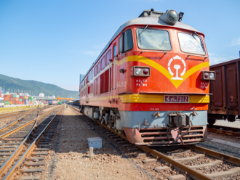
"Yantian Port got its name quite literally," a port staff member explains. More than three decades ago, this area was little more than tidal flats. Today, Yantian Port serves as the last port-of-call in China for many vessels before they set sail for overseas markets. Handling more than one-third of Guangdong's imports and exports, it is now one of the world's largest container terminals.
Yantian Port handled its first container in 1994. Its cumulative throughput surpassed 100 million TEUs in 2013 and 200 million TEUs in 2021, setting industry records along the way. Today, more than 100 shipping services connect Yantian Port with destinations around the world every week.
In the port's early years, garments, furniture, and home appliances—the "old three"— were the main exports heading from here to global markets. Today, new energy vehicles, lithium-ion batteries, and photovoltaic products—the "new three"—have emerged as leading exports, while high-value-added products such as drones, integrated circuits, and 3D printers are increasingly finding their way to overseas markets.
Anchored in Shenzhen, serving South China, and connecting across the world, Yantian Port's growth mirrors the transformation and upgrading of Shenzhen's industrial structure and foreign trade. It also reflects the broader story of China and other Asia-Pacific economies growing together, deepening economic ties, and advancing toward greater integration.
Data from Shenzhen Customs show that Shenzhen's imports and exports with APEC economies grew from CNY267.5 billion in 1996 to CNY3.13 trillion in 2025, an average annual growth rate of 8.5% and an increase of more than tenfold. In 2025, the "new three," AI-enabled products, medical instruments and equipment, and other distinctive products together accounted for 25.6% of Shenzhen's exports to APEC economies.
"Cargo composition reflects industrial structure, the state of economic cooperation, and policy trends," said Yin Yunwei, director of the Baggage and Postal Articles Supervision Division at Shenzhen Customs. From the "three processing trades and one compensation trade" of the early years of reform and opening up—processing with supplied materials, processing with supplied designs or samples, assembly with supplied parts, and compensation trade—to today's high-end, intelligent, and green industries, and onward to emerging fields such as robotics and AI, Shenzhen's foreign trade development encapsulates China's broader journey of development, opening up, and cooperation. It also mirrors the evolution of economic globalization and regional economic integration.
APEC was established in November 1989 against the backdrop of accelerating economic globalization, with the aim of promoting trade and investment liberalization and facilitation and fostering economic growth and prosperity. China formally joined APEC in November 1991. As Shenzhen has continued to open up, the city has witnessed Chinese manufacturing evolve and reach global markets, while China's vast and growing market has created new opportunities for economic growth across the region.
As fresh Peruvian blueberries from the new harvest hit the market, business is getting busier at Joy Wing Mau Fruit Technologies Corporation Limited (JWM), headquartered in Shenzhen. "We handle nearly 30% of all Peruvian blueberries imported into China. Our team even travelled to Peru recently to discuss supply arrangements," said Li Nan, Vice President of JWM.
Since entering the fruit import and export business in 1998, JWM has grown into a leading global fruit supply chain company. New Zealand kiwifruit, Chilean cherries, Peruvian blueberries, Malaysian durians, Thai coconuts... More than 200 varieties of imported fruit from over 40 countries and regions are now part of its portfolio.
"We started in Shenzhen and have built a nationwide distribution network. Our partnerships with overseas suppliers have expanded beyond trade and procurement to include varietal licensing, supply chain coordination, and other forms of collaboration," Li said. The company's rapid growth over the past 28 years, Li added, has been driven by the vitality of China's economy and an environment of openness, cooperation, and mutual benefit. The continued expansion and upgrading of China's consumer market, trade facilitation measures such as Authorized Economic Operator (AEO) accreditation, and open platforms such as the China International Import Expo have enabled companies like JWM to become both participants in and beneficiaries of regional growth and prosperity.
Sandra Wenz, Commercial Manager of Hortifrut Asia, a global berry leader and strategic partner of JWM, said that in recent years, tariff reductions under the Peru-China Free Trade Agreement, together with the launch of a shipping service linking Peru's Port of Chancay with the Port of Shanghai, have enabled Peruvian blueberries to reach Chinese consumers faster, fresher, and with greater market competitiveness. "Free trade, openness, and cooperation are essential to the prosperity of the Asia-Pacific. We look forward to the APEC meeting in Shenzhen further advancing regional free trade and unlocking even more opportunities for cooperation."
Industrial Integration: Regional Collaboration Strengthens Industrial Chain Resilience
"Shenzhen was China's first Special Economic Zone, while we were the first foreign-invested enterprise in the People's Republic of China. We both share a pioneering spirit," said Zhang Xuefeng, General Manager of ChiaTai Conti Group, taking us back more than four decades.
In July 1979, the blast that rang out in Shekou marked the beginning of Shenzhen's transformation. A year and a half later, a joint investment project between Thailand's Chia Tai Group and the U.S. company Continental Grain Company was launched in Shenzhen. China's first modern feed mill broke ground in Hongzhuling, Shekou, and began operations under an unprecedented arrangement: construction started before the necessary permits had been obtained.
Today, Hongzhuling has given way to the bustling Shennan Boulevard, while a modern building now stands on the former site of the feed mill. From its base in Shenzhen, ChiaTai Conti Group has steadily expanded its presence across China, extending its business from feed production to animal farming and establishing numerous branches and subsidiaries.
Last September, replicas of the approval certificate for foreign-invested enterprises bearing the historic number "[1981] 0001," along with other historical documents donated by ChiaTai Conti Group, were officially added to the collection of the Shenzhen Museum. These artifacts represent not only a forward-looking decision by a pioneering company, but also the starting point of transformation for a city, a country, and an era. Following in the footsteps of "0001," investment from Hong Kong SAR, Japan, the United States, and elsewhere began flowing into Shenzhen. To date, companies from 180 countries and regions have invested in the city, including more than 340 Fortune Global 500 companies. In 2025, approximately 16,000 new foreign-invested enterprises were established in Shenzhen, with companies from Asia-Pacific economies accounting for 93.3%, up 71.7% year on year.
"As a pioneer in China's reform and opening up, Shenzhen has provided a model for technological exchange and industrial collaboration across the Asia-Pacific," Zhang said. "Within the framework of Asia-Pacific economic cooperation, ChiaTai Conti's experience shows that openness begins with institutional breakthroughs, takes root in industrial development, and benefits the wider region."
Over the past three decades, the "Asia-Pacific miracle" has been underpinned by the deep integration and smooth operation of regional industrial and supply chains. Looking out from Shenzhen across the vast Pacific, the development of the Guangdong-Hong Kong-Macao Greater Bay Area and the implementation of the Regional Comprehensive Economic Partnership (RCEP) have encouraged Chinese and international companies to identify areas of shared interest, promote open cooperation across industrial and supply chains, and further strengthen the foundations for shared development and prosperity in the Asia-Pacific.
Committed to opening up across the board, Shenzhen continues to enhance its appeal to international investors while strengthening the competitiveness of its companies expanding overseas. Tian Changhao, an official of the Investment Promotion Bureau of Shenzhen Municipality, said Shenzhen has seen foreign investment grow from small to large in scale, from a handful of investors to a broad-based presence, and from lower-value to higher-value projects. Its cooperation with Asia-Pacific economies across industrial and supply chains has also grown increasingly close. At the same time, a growing number of Shenzhen companies are venturing overseas, investing in foreign markets and becoming deeply integrated into the higher-value segments of global value chains. In the process, they are also contributing to local development, creating opportunities and benefits on both sides.
Shenzhen Keyto Fluid Technology Co., Ltd. is one such company. Zhang Cheng, Chairperson of the company, said that its determination to "tackle the toughest challenges first" has enabled it to independently develop and manufacture products for highly competitive international markets, making the company a supplier to several leading multinational medical device companies. At the end of 2024, Keyto Fluid invested in a manufacturing facility in Penang, Malaysia. The plant reached break-even in its first year of operation. "Customer demand prompted us to expand into overseas markets. Ultimately, however, it is China's opening-up policies, the industrial ecosystem of the Greater Bay Area, and the broader environment of regional cooperation that have enabled us to go further," Zhang said.
Zhang Jifu, General Manager of Keyto Fluid's Malaysian factory, told reporters that the facility has enriched Penang's industrial ecosystem, helped drive the local medical manufacturing sector toward higher-value-added and supporting industries, and trained a new generation of manufacturing talent.
"The factory serves customers across the Asia-Pacific, including North America and ASEAN. Its impact goes beyond bilateral cooperation, helping strengthen connectivity across regional markets," Zhang Jifu said. "The Malaysian factory combines the respective strengths of China and Malaysia to build an efficient cross-border supply chain. This kind of regional division of labour and collaboration plays an important role in strengthening industrial chain resilience."
Mutual-Benefit Innovation: Local Breakthroughs, Cross-Border Replication – A Sustainable Driver for Regional Prosperity
"Take a walk around with me, and you'll understand why I chose to start my business here." In Huaqiangbei, Shenzhen, Noah, an American entrepreneur, led a reporter into SEG E-Market, weaving with ease through rows of tightly packed stalls and showing firsthand how quickly and conveniently he can find whatever he needs.
Noah is developing smart glasses designed to assist with modelling and artistic creation. At the Blackark OPC AI Hardware International Innovation Space, an incubator for emerging technologies, more than 20 international entrepreneurs like Noah are working to turn their ideas into market-ready products. "Whenever I come up with a new idea, I can immediately source components, take things apart, put them together in new ways, assemble prototypes, and test them. The entire industrial chain is right here. There's a well-developed incubation ecosystem and a culture that embraces trial and error. Here, anything is possible," Noah said.
Huaqiangbei, once known as "China’s No. 1 Electronics Street," is evolving into a global hub for hardware innovation and entrepreneurship, where new industries and businesses are taking root and entrepreneurs from around the world are flocking. Behind this transformation lies the speed and ingenuity with which Shenzhen has emerged as a global "Centre of Innovation."
Born out of China's reform and opening up, Shenzhen has long embraced the belief that development is paramount, along with a pioneering spirit of bold exploration and experimentation. Innovation is woven into the city's DNA, creating fertile ground for new ideas and new businesses to flourish. Huawei, Tencent, and BYD all started out here and have since grown into Fortune Global 500 companies. Over the past decade, the number of unicorn companies in Shenzhen has grown from 10 to 44, while "hard tech" sectors such as robotics, semiconductors, and AI have emerged as major drivers of growth.
As innovation gathers pace, Shenzhen is also casting its sights farther afield. Leveraging its proprietary cloud computing and AI technologies, Tencent has deepened cooperation with leading companies in countries such as Indonesia and Malaysia, harnessing digital technologies to drive the upgrading of industrial value chains across the Asia-Pacific. BYD has established itself among the leading players in passenger vehicle markets in Singapore, Australia, Indonesia, Thailand, and other countries. Since its plant in Rayong, Thailand, began operations, it has achieved localized production of five vehicle models. By advancing digital and intelligent transformation and pursuing green, low-carbon development, Shenzhen companies are injecting fresh momentum into growth across the Asia-Pacific through an open and innovation-driven ecosystem.
Innovation is also driving foreign investment in Shenzhen toward higher-value-added activities, including R&D and headquarters operations. "In the first half of this year, actually utilized foreign investment in the city's high-tech industries accounted for more than 70% of the city's total. High-tech industries have become the core engine driving foreign investment growth," said Tian Changhao.
For companies that have put down deep roots in Shenzhen, the rewards are already evident. In 1998, U.S.-based Whirlpool established a global R&D centre in Shenzhen. Since then, it has secured more than 100 technology patents in key areas of home appliance technology, including smart controls, structural design, and energy efficiency. "Shenzhen's openness has given us access to global resources and talent, while its innovation ecosystem has provided strong institutional support for technological breakthroughs and the commercialization of innovations," said Fang Rong, Chairperson of Whirlpool Product Development (Shenzhen) Co., Ltd.
Today, smart temperature-control technologies, high-efficiency variable-frequency technologies, and highly integrated structural solutions developed by Whirlpool's Shenzhen team are widely deployed across markets in the Asia-Pacific and North America—bringing "Made in Shenzhen" innovations to consumers around the world. "Shenzhen is the Group's technology innovation hub for the Asia-Pacific and the world," Fang said. Innovation partnerships among multinational companies such as Whirlpool are helping break down barriers to innovation between economies, unleash new sources of growth, and lay a solid foundation for the Asia-Pacific's long-term prosperity and stability.
New business models are taking off. By the end of this year, Singapore's multimodal transport operator ComfortDelGro Group plans to establish its autonomous mobility headquarters in Shenzhen. The move will help the Group develop a replicable and standardized operating model for autonomous vehicle fleets, with a view to scaling it across its global markets.
"Shenzhen is a leading example of innovation-driven development in China. Its strategic location and favourable policies, coupled with its open and inclusive business environment and strong support for emerging industries, closely align with ComfortDelGro's strategic priorities,” said Wu Xiangfeng, President of ComfortDelGro China. The Group has already entered into a strategic partnership with Chinese autonomous driving company Pony.ai, launching a robotaxi pilot in Guangzhou and deploying autonomous mobility services in Punggol, Singapore.
"In the global technological revolution and industrial transformation, innovation is key to gaining the initiative. Greater innovation cooperation among businesses across the Asia-Pacific can accelerate the commercialization of cutting-edge technologies and allow the region to share the benefits of innovation. When companies can innovate in one market and scale those innovations across multiple countries, they can create a sustainable engine for regional prosperity," Wu said.
As a new wave of technological revolution and industrial transformation gathers pace, how can Asia-Pacific economies seize emerging opportunities and rise to new challenges? Shenzhen, a city built on openness, innovation, and cooperation, is offering an answer: economies across the Asia-Pacific must work together to shape the region's next chapter.